B4B Budgets: Making Governance Usable

Context & Challenge

Team size directly correlates with booking volume - companies with 100+ users generate 156 bookings/month vs 2.7 for single users. However, our team management experience is plagued by friction, confusion, and legacy technical debt. This initiative modernizes the entire team management experience to drive organic growth through easier team expansion.

Role & Contribution

Team size directly correlates with booking volume - companies with 100+ users generate 156 bookings/month vs 2.7 for single users. However, our team management experience is plagued by friction, confusion, and legacy technical debt. This initiative modernizes the entire team management experience to drive organic growth through easier team expansion.

Research & Insights

Team size directly correlates with booking volume - companies with 100+ users generate 156 bookings/month vs 2.7 for single users. However, our team management experience is plagued by friction, confusion, and legacy technical debt. This initiative modernizes the entire team management experience to drive organic growth through easier team expansion.

1

Goals & Strategic Objectives

  • Increase usage of budget-setting features
  • Improve clarity of policy impact on bookings
  • Reduce support requests related to budget confusion
  • Align governance tools with enterprise mental models
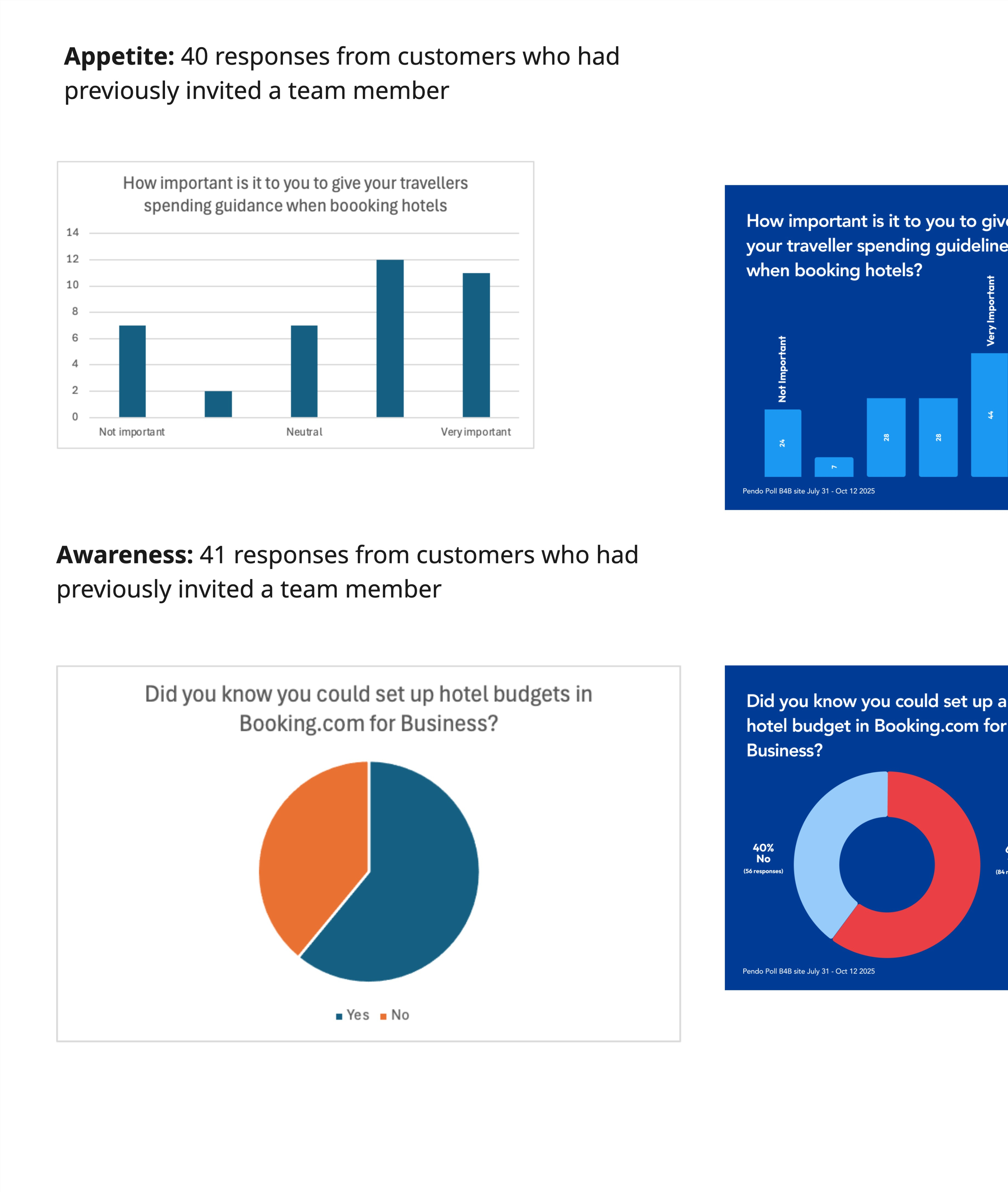
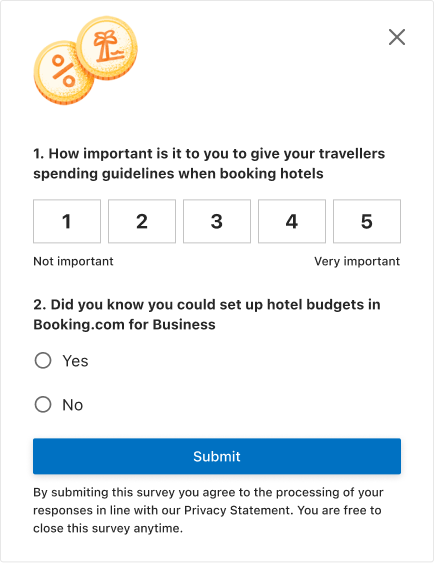
research
dashboard

2

Design Strategy & Approach

We shifted from list-based configuration to structured hierarchy visualisation.

Strategy pillars:

  • Transparency
  • Predictability
  • Real-time contextual feedback
abtesting
registration
Arrow

3

Solution

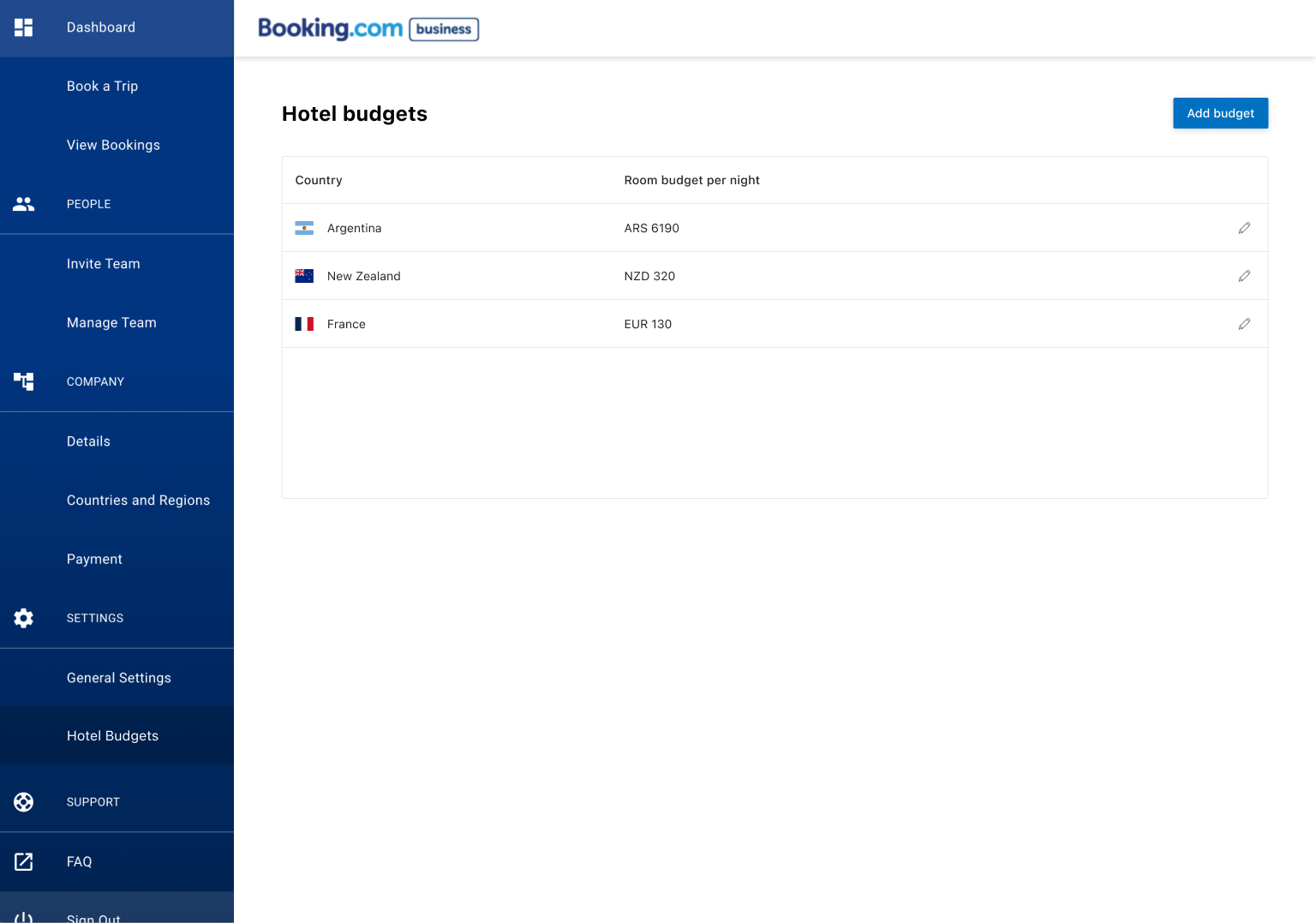
  • Redesigned budget overview dashboard
  • Clarified allocation structures and hierarchies
  • Introduced clearer visual indicators for policy constraints
  • Improved interaction patterns for editing and reviewing budgets
popup
Arrow down

Results & Impact

  • Increased adoption of budget tools
  • Reduced ambiguity around policy enforcement
  • Improved admin efficiency in financial configuration tasks
Divider

Reflection & Learnings

Enterprise tools fail when they overemphasize control and underemphasize clarity.

This initiative influenced how governance features are introduced across the ecosystem — clarity first, enforcement second.

Future opportunity: predictive budget insights powered by usage trends.

Divider

Design

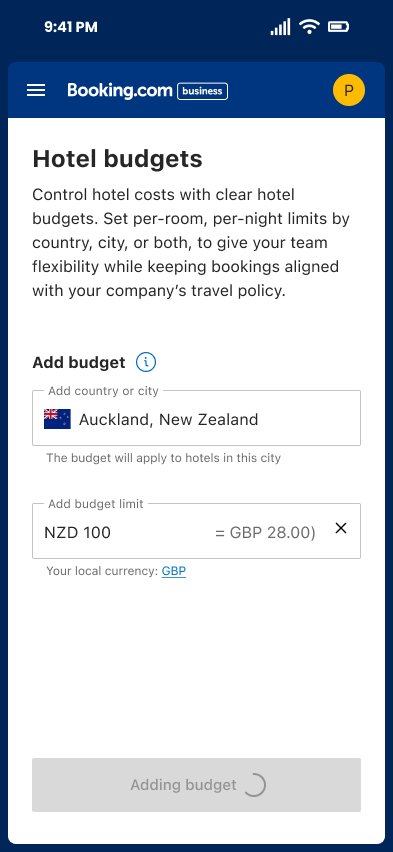
budgets-mobile

B4B Budgets: Making Governance Usable

Context & Challenge

Team size directly correlates with booking volume - companies with 100+ users generate 156 bookings/month vs 2.7 for single users. However, our team management experience is plagued by friction, confusion, and legacy technical debt. This initiative modernizes the entire team management experience to drive organic growth through easier team expansion.

Role & Contribution

Team size directly correlates with booking volume - companies with 100+ users generate 156 bookings/month vs 2.7 for single users. However, our team management experience is plagued by friction, confusion, and legacy technical debt. This initiative modernizes the entire team management experience to drive organic growth through easier team expansion.

Research & Insights

Team size directly correlates with booking volume - companies with 100+ users generate 156 bookings/month vs 2.7 for single users. However, our team management experience is plagued by friction, confusion, and legacy technical debt. This initiative modernizes the entire team management experience to drive organic growth through easier team expansion.

1

Goals & Strategic Objectives

  • Increase usage of budget-setting features
  • Improve clarity of policy impact on bookings
  • Reduce support requests related to budget confusion
  • Align governance tools with enterprise mental models
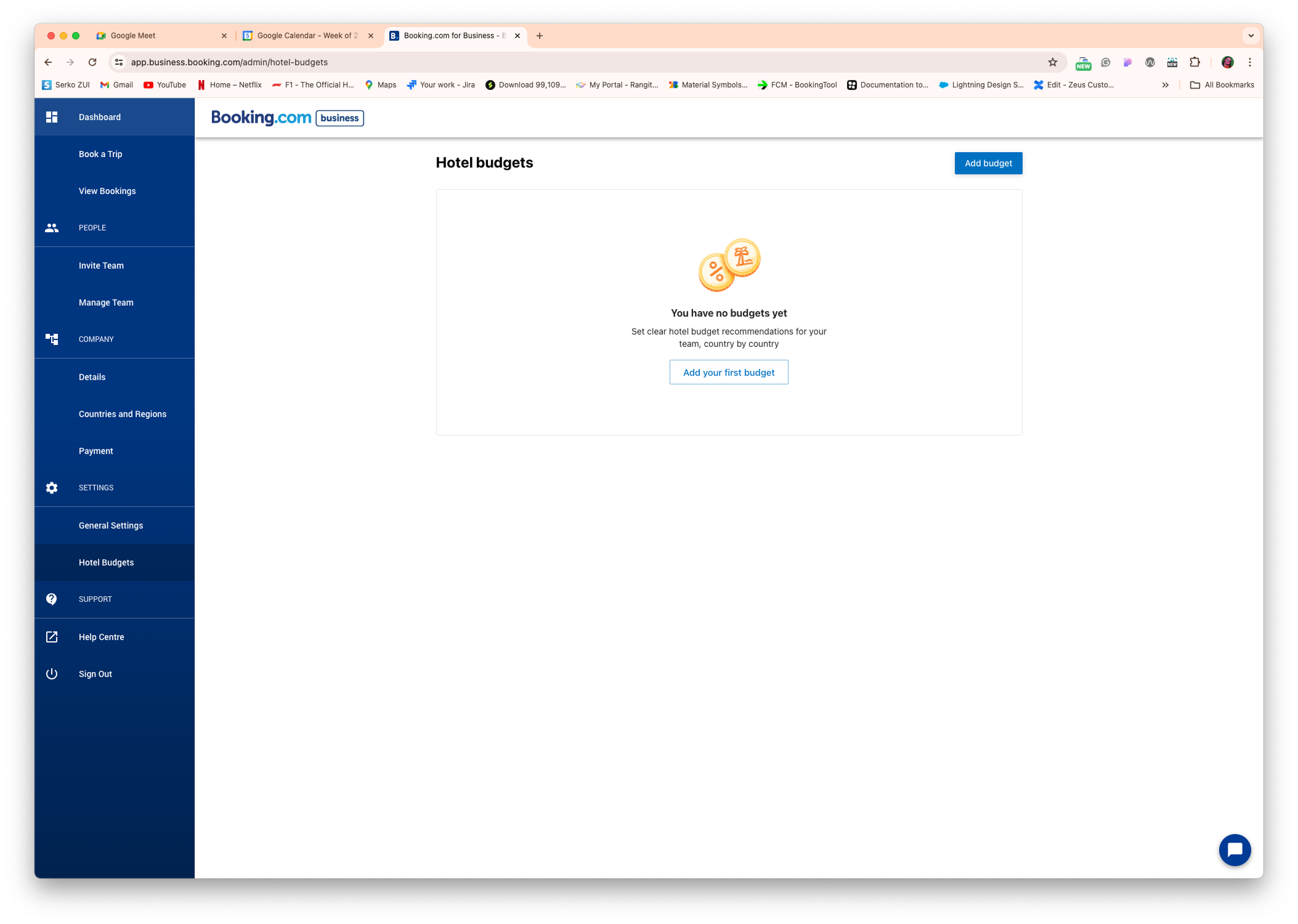
research
dashboard

2

Design Strategy & Approach

We shifted from list-based configuration to structured hierarchy visualisation.

Strategy pillars:

  • Transparency
  • Predictability
  • Real-time contextual feedback
abtesting
registration
Arrow

3

Solution

  • Redesigned budget overview dashboard
  • Clarified allocation structures and hierarchies
  • Introduced clearer visual indicators for policy constraints
  • Improved interaction patterns for editing and reviewing budgets
popup
Arrow down

Results & Impact

  • Increased adoption of budget tools
  • Reduced ambiguity around policy enforcement
  • Improved admin efficiency in financial configuration tasks
Divider

Reflection & Learnings

Enterprise tools fail when they overemphasize control and underemphasize clarity.

This initiative influenced how governance features are introduced across the ecosystem — clarity first, enforcement second.

Future opportunity: predictive budget insights powered by usage trends.

Divider

Design

B4B Budgets: Making Governance Usable

Context & Challenge

Budget management in corporate travel platforms is inherently complex. The legacy B4B budget tools were functional but cognitively heavy, making policy enforcement feel opaque and rigid.

The risk: low admin engagement and inconsistent usage of policy tools.

Role & Contribution

As UX Lead, I:

  • Defined strategic direction for financial governance UX
  • Facilitated workshops with stakeholders across finance, compliance, and engineering
  • Mapped admin mental models to budget flows
  • Led redesign of allocation, visibility, and policy feedback mechanisms

Research & Insights

Key patterns emerged:

  • Admins struggled to visualise budget hierarchy
  • Policy enforcement felt punitive rather than preventive
  • Lack of real-time feedback reduced trust in the system

Insight: Budget tools must feel like guidance systems, not policing systems.

research
dashboard

1

Goals & Strategic Objectives

  • Increase usage of budget-setting features
  • Improve clarity of policy impact on bookings
  • Reduce support requests related to budget confusion
  • Align governance tools with enterprise mental models

2

Design Strategy & Approach

We shifted from list-based configuration to structured hierarchy visualisation.

Strategy pillars:

  • Transparency
  • Predictability
  • Real-time contextual feedback
abtesting
registration
Arrow
popup

3

Solution

  • Redesigned budget overview dashboard
  • Clarified allocation structures and hierarchies
  • Introduced clearer visual indicators for policy constraints
  • Improved interaction patterns for editing and reviewing budgets
Arrow down

Results & Impact

  • Increased adoption of budget tools
  • Reduced ambiguity around policy enforcement
  • Improved admin efficiency in financial configuration tasks
divider

Reflection & Learnings

Enterprise tools fail when they overemphasise control and underemphasise clarity.

This initiative influenced how governance features are introduced across the ecosystem — clarity first, enforcement second.

Future opportunity: predictive budget insights powered by usage trends.

divider

Design